


Where can grapplers in Houston get sports massage?

If you train jiu-jitsu, wrestling, or judo in Houston, you already know the ache that lingers after a hard round — forearms locked from grips, a neck that won't turn, hips that feel uneven. Generic deep-tissue work often misses what grappling actually does to a body. This guide explains how sports massage for grapplers houston athletes can use strategically, what to look for in a therapist who understands the mat, and how to fit sessions into a real training week.
What Makes Sports Massage Different for Grappling Athletes
Grappling — jiu-jitsu, wrestling, judo — places a pattern of stress on the body that few other sports replicate. A runner accumulates linear, repetitive fatigue; a ground fighter alternates between isometric bursts, loaded rotation, and passive forced stretching within seconds. Sports massage for this population needs to read tissues that have been simultaneously compressed, pulled, and twisted, often against the athlete's will.
Massage therapists who only work with endurance athletes tend to rely on rhythmic pressure and blood flow. Those who treat grapplers must add release work at grip angles, cupping or cross-fiber friction at forearm and trapezius insertions, and attention to the postural compensations created by the hunched posture of guard work.
Pressure, Positions, and Tissues Demanded by Jiu-Jitsu, Wrestling, and Judo
Grappling requires prolonged grip strength, constant cervical rotation, and scapular stabilization under eccentric load. The most recruited tissues — wrist and finger flexors, levator scapulae, sternocleidomastoid, gluteus medius, and adductors — rarely appear as priorities in massage protocols for runners or cyclists.
Forearms and hands: gi grips create hypertrophy and shortening of the flexors
Neck and upper trapezius: guillotine defense and head pressure
Adductors and gluteus medius: closed guard, triangles, and sweeps
Shoulder rotators: kimuras, americanas, and omoplatas
Lower back and quadratus lumborum: bridges, inversions, and guard passing defense
An effective session for grapplers combines deep pressure in specific layers with passive joint mobilization. The therapist needs to understand that neck tension in a fighter often originates from a stiff hip or an unstable shoulder, not from the neck itself.
Sports Massage vs. Physical Therapy and Myofascial Release
Sports massage and physical therapy are not interchangeable, though they complement each other. Massage works on muscle tension, fascial adhesions, and autonomic nervous system response; physical therapy diagnoses and treats joint dysfunction, instability, and movement patterns with a clinical plan. The difference between sports massage lies in the goal: the former prepares or recovers for performance, the latter targets deep layers without a sports context.
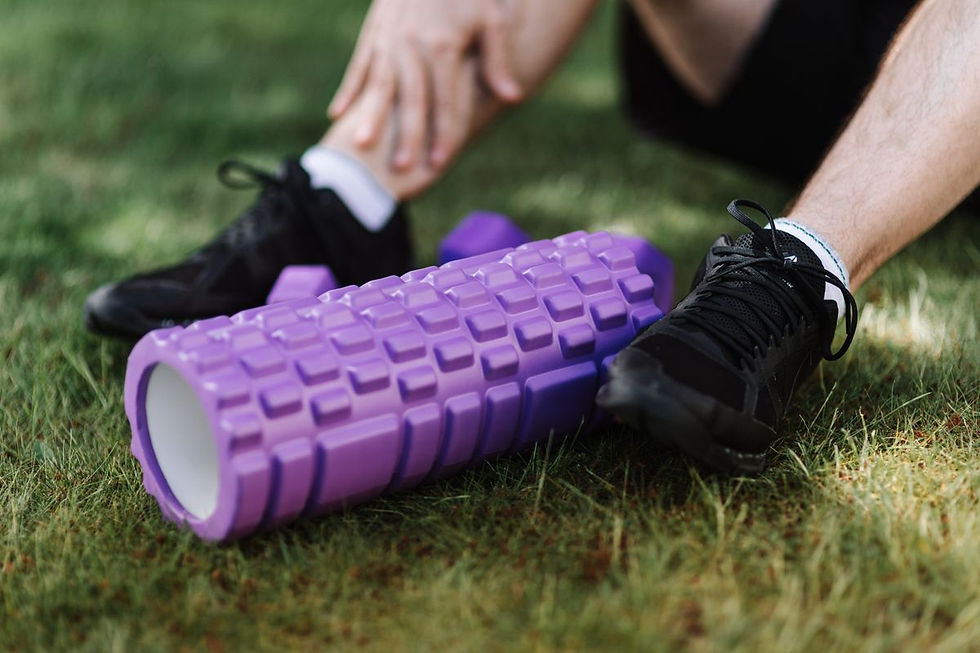
Myofascial release — with rollers, balls, and cups — is a tool within the sports massage arsenal, not a replacement. A grappler can perform myofascial release daily at home, but professional massage adds trained tactile reading, pressure at angles the body cannot reach on its own, and intensity modulation based on training phase.
Common Injuries and Tension Patterns in Houston Grapplers
Data from BJJ studies point to the knee, shoulder, and elbow as the most injured joints, with twisting and leverage mechanisms dominating. Sports massage does not treat structural injury, but it addresses the compensatory tension that builds around it — and that tension, when ignored, turns an acute injury into a chronic one.
Neck, Shoulders, and Elbows Under Leverage
Submissions like the kimura, americana, and omoplata force the shoulder into extreme external or internal rotation. The rotator cuff and posterior capsule accumulate micro-tension that the fighter feels as a "heavy shoulder" or difficulty raising the arm overhead. Massage focuses on releasing the teres minor, infraspinatus, and pectoralis minor to restore subacromial space.
Stiff neck after guillotine: release sternocleidomastoid and scalenes
Gi elbow: cross-fiber friction on the medial epicondyle and flexors
Kimura shoulder: work on the posterior capsule and teres minor
Overloaded trapezius: sustained pressure on upper fibers and levator scapulae
The elbow deserves special attention. Medial epicondylitis — "fighter's elbow" — arises from repeated traction on grips and armbar defense. Massage on the anterior forearm, with flexor release and work at the tendinous origin, reduces traction on the epicondyle and eases symptoms without interrupting training.
Hips, Knees, and Lower Back in the Guard Game
Closed guard demands sustained hip flexion and constant adduction; spider guard and de la Riva add external rotation and asymmetric abduction. The result is a tension pattern where one side of the hip becomes shortened and the other lengthened but weak — an imbalance that massage helps correct by releasing the hypertonic side before strengthening work begins.
Grapplers' knees suffer from twisting during sweeps and lateral pressure during guard passes. Tension in the iliotibial band and vastus lateralis often pulls the patella laterally, generating anterior discomfort. Sports massage works the lateral thigh release and distal quadriceps to relieve patellofemoral compression. The lower back, in turn, is usually a victim of stiff hips: when the hip cannot rotate, the spine compensates.
How to Choose a Massage Therapist Who Understands Grappling in Houston
Houston has hundreds of massage therapists, but few understand the mechanics of jiu-jitsu. The ideal professional does not need to be a black belt — they need to know what a guard, a grip, and a lever are, and how those positions translate into specific tissue tension.
A therapist who has worked with wrestlers, judokas, or BJJ fighters understands that a grappler's neck tension is not "office stress" and that a purple belt's forearm does not respond to the same protocol as a typist's. That reading changes everything: depth, rhythm, positioning, and expected outcomes.
Questions to Ask Before Booking Your First Session
Before scheduling, a five-minute phone or message conversation prevents generic sessions. The questions below quickly filter those who treat combat athletes from those who treat "bodies in general."
Have you worked with jiu-jitsu, wrestling, or judo athletes?
How do you assess grip and forearm tension in grapplers?
Do you combine myofascial release and joint mobilization in the same session?
What is your approach to neck and trapezius work for combat athletes?
Do you adjust pressure based on training or competition phase?
The ideal answer mentions postural assessment, work along muscle chains, and adapting pressure to the athlete's current moment. Vague responses like "sports massage is the same for everyone" or "I do deep tissue" without a combat context indicate that the professional does not differentiate a runner from a fighter.
Signs the Professional Treats Combat Athletes, Not Just Runners
The first sign is vocabulary: the therapist asks about grips, guard, sweeps, kimuras, or guillotines. The second is assessment: they look at the fighter's posture standing and on the ground, test hip and shoulder rotation, and ask about the dominant guard side. The third is technique: they use cross-fiber friction at forearm tendinous origins, release adductors and rotators with the athlete in specific positions, and not just lying face down.
Asks about your preferred guard position and dominant side
Assesses imbalance between the right and left sides of the hip
Works the forearms, hands, and neck without you asking
Understands the difference between submission pain and overuse pain
Recommends frequency based on your weekly training volume
Where to Find Sports Massage for Grapplers in Houston
Sports massage offerings in Houston fall into three formats: specialized clinics, mobile therapists, and in-gym services. Each has advantages depending on the fighter's routine and the session's goal.
For those training in Oak Forest, the Heights, or Garden Oaks, proximity to the gym reduces logistical friction — a decisive factor for anyone already spending many hours on the mats. A service integrated into the training location eliminates extra commuting and allows a session immediately after training, when tissues are still warm and responsive.
Clinics and Studios Focused on Combat Athletes
Clinics focused on combat athletes typically offer postural assessment, table work, and integration with other recovery resources. The advantage is a controlled environment and the possibility of combining massage with sauna for sore muscles or thermal contrast in the same visit.
In Houston, wellness studios integrated with combat gyms have been multiplying. The differentiator is synergy: the therapist watches the athlete train, talks with the coach about the lesson plan, and adjusts the session to what happened on the mats that day. That level of context is impossible in a generic clinic.
Mobile Services and Sessions Inside Gyms
Mobile therapists bring the table to the athlete's home or gym. For grapplers with tight schedules, this format saves commuting time and allows a session at the same time the body is still warm from training. The limitation is space and, sometimes, the absence of other recovery resources on site.
Mobile: maximum convenience, ideal for immediate post-training
In-gym: complete sports context and synergy with coaches
Clinic: controlled environment and access to multiple recovery resources
Integrated wellness hub: combines massage, sauna, and contrast in one visit
Sessions inside grappling gyms have a unique advantage: the therapist sees the athlete in action. They can ask the fighter to demonstrate their grip, observe guard posture, and identify compensations that do not appear lying on the table. For those seeking lasting results, this format tends to deliver more value per session.
When to Book: Before Training, After Training, or During Competition Week
The timing of massage completely changes the outcome. A deep session before training reduces contraction capacity and increases injury risk; a light session after training accelerates recovery; a deep session on the eve of competition can leave the athlete feeling "too loose" or sore on fight day.
The practical rule: activation massage is short, rhythmic, and superficial; recovery massage is longer, deeper, and focused on releasing accumulated tension. The most common mistake among grapplers is booking a deep massage the day before competition, when the body needs freshness, not aggressive release.
Pre-Training Protocol for Mobility and Activation
Pre-training, massage works as passive warm-up: it increases local blood flow, reduces joint stiffness, and prepares the nervous system for effort, with emphasis on joint mobilization and activation of the glutes and scapular stabilizers.
Focus on joint mobilization and activation, not deep release
Avoid cross-fiber friction and sustained pressure on tendons
Ideal for technical training days or competition
For competitors, an activation session on the morning of weigh-ins or a few hours before a fight helps wake up the body without generating fatigue. The key is communication: the therapist needs to know the goal is immediate performance, not recovery.
Post-Training Recovery and the Window Before Returning to the Mats
Post-training, massage reduces perceived muscle soreness and accelerates metabolite clearance. Sessions immediately after training, with the body still warm, allow deeper work with less discomfort.
During competition week, the protocol shifts: deep massage through Wednesday or Thursday, a light activation session on Friday, and no aggressive pressure on Saturday or Sunday of the fight. The body needs to arrive on the mats with useful tension — the kind that generates explosiveness — not with tissues that are overly "softened."
What Determines the Cost of a Sports Massage Session in Houston
The price of a sports massage session in Houston varies according to three main factors: duration, therapist specialization, and service format. Longer sessions cost more in absolute terms, but the cost per minute tends to drop; therapists with experience in combat athletes charge more for specialized reading; clinic-based services with full infrastructure cost more than mobile services.
There is no single price table in the city, and price alone says little about return. A grappler who pays less for a generic 60-minute session may need three sessions to achieve the same result as a single specialized session — the real cost is the cost per result, not the cost per minute.
Duration, Specialization, and Service Format
Thirty-minute sessions work for focal release — forearms, neck, or a single muscle group. Sixty-minute sessions cover upper or lower limbs. Ninety-minute sessions allow full-body work with assessment. For grapplers training four or more times per week, a 60-minute session focused on priority areas tends to be the best balance between cost and benefit.
Duration: 30 minutes for local focus, 60 for a region, 90 for full body
Specialization: therapists with combat experience charge more per session
Format: clinic-based services with infrastructure cost more than mobile
Packages: single sessions cost more per unit than monthly packages
Insurance Coverage and Reimbursement in a Sports Context
American health plans rarely cover sports massage as a standard benefit, but many accept partial reimbursement when the service is prescribed by a physician or chiropractor as part of treatment. Flexible spending accounts (FSA) and health savings accounts (HSA) can be used in some cases, provided the therapist supplies proper documentation and the service has clinical justification.
For amateur athletes without a medical referral, sports massage falls under performance expenses — similar to supplementation or equipment. The most common path in Houston is a discounted monthly package, which lowers the cost per session and encourages consistency, a determining factor for lasting results.
How to Integrate Massage into Your Training and Recovery Routine
Sports massage only delivers results when it is part of a system, not an isolated event. A grappler who trains four times a week and gets a massage once a month is merely putting out fires; the same athlete with a biweekly session and daily myofascial release at home builds progressive tissue resilience.
Integration starts with mapping training volume. High-intensity weeks call for recovery massage the day after the hardest session; deload weeks call for a lighter maintenance session. Active recovery is just as important as passive rest, and massage occupies the space between the two.
Realistic Frequency for Those Training Multiple Times per Week
More than one session per week rarely adds benefit proportional to cost, except during injury recovery periods.
Injury or high-load period: temporary weekly session
Maintenance with light training: monthly session is sufficient
Ideal frequency also depends on age and injury history. Fighters over 35 tend to need more passive recovery than 20-year-old athletes, and those who have undergone knee or shoulder surgery benefit from more frequent sessions focused on the compensatory chain.
Combining with Mobility, Sleep, and Hydration
Massage enhances what is already done well and does not compensate for what is done poorly. A grappler who sleeps five hours a night and trains dehydrated will not reap the full benefits of any session, no matter how good the therapist is. Sleep is the primary modulator of tissue recovery; hydration keeps fascia sliding; and daily mobility prevents re-shortening between sessions.
Flexibility improves with consistent yoga practice, and combining biweekly massage with daily mobility creates a virtuous cycle: massage releases, mobility maintains, sleep consolidates. For grapplers, yoga classes geared toward martial artists complement massage by working the same hip, shoulder, and spine patterns with active stretching.
Mistakes That Make Houston Grapplers Waste Time and Money
The most expensive mistakes in sports massage are not in therapist selection but in expectations and service usage. Treating massage as an occasional luxury, choosing by lowest price without evaluating experience, and ignoring persistent pain that requires clinical assessment are the three patterns that waste the most resources.
A grappler who gets a deep massage on the eve of competition, pays for a 30-minute session expecting full-body work, or keeps training with acute pain believing "massage will fix it" is throwing money away — and risking their own longevity in the sport.
Choosing the Lowest Price Without Evaluating Experience
Houston's lowest prices usually come from generalist therapists who apply the same protocol to every client. For a grappler, that savings translates into sessions that do not reach the right tissues, pressure that is inadequate for the training phase, and zero reading of fight-specific compensations. The result is the need for more sessions to achieve the same benefit — or no benefit at all.
Generalist therapist: standard protocol, no fight-specific reading
Specialized therapist: postural assessment and focus on grappling chains
Low price without context: more sessions for the same result
Fair price with specialization: fewer sessions, lasting results
Cost-benefit evaluation should consider what the session delivers in terms of longevity on the mats. A fighter who avoids three weeks of missed training due to injury has already offset the cost of an entire year of sports massage.
Ignoring Persistent Pain That Requires Clinical Assessment
Pain that persists for more than two weeks, worsens with training, wakes the athlete at night, or comes with tingling, weakness, or swelling is not a case for massage — it is a case for a physical therapist or physician. Sports massage works on tension and adhesions; it does not treat ligament tears, meniscus injuries, disc herniations, or nerve compression.
The most serious mistake is using massage as an anesthetic to keep training with a structural injury. The session relieves compensatory tension and masks the symptom while the injury progresses silently. When the pain finally forces a stop, the damage is greater and the time away is longer. The experienced grappler learns to distinguish: muscle tension responds to massage; joint, neurological, or bone pain requires clinical assessment before any session.


Comments