


How can massage aid BJJ recovery?

Anyone who trains Brazilian Jiu-Jitsu knows the feeling: the neck that won't turn freely, the hip that catches halfway through a guard pass, the lower back that stiffens the day after hard rounds. Grappling loads the body unevenly, and those accumulated restrictions don't clear up on their own. This guide looks at how massage for BJJ recovery fits into a training week — which areas need attention, which modalities suit which phase, and when bodywork is the wrong tool altogether.
Why BJJ practitioners accumulate specific muscle tension
Brazilian Jiu-Jitsu places a distinctive mechanical demand on the body. Where running or cycling follows a predictable movement pattern, grappling swings between explosive efforts, prolonged isometric contractions, and positions forced by an opponent's weight and leverage. The sport repeatedly calls for the same stabilizing efforts: maintaining closed guard, framing against cross-face pressure, escaping side control, and defending chokes all demand sustained engagement of particular muscle groups.
The joints and chains most taxed in grappling
The neck and upper trapezius absorb constant strain from posture battles and choke defense. Every bridge, frame, or collar-tie exchange forces the cervical extensors and levator scapulae to fire in protection of the spine.
The hips and lumbar spine form the second major cluster of tension. Guard retention, triangle setups, and hip escapes require deep hip flexion paired with rotation, while the erector spinae work without pause to keep an opponent from flattening the posture.
Neck and upper traps: choke defense, framing, posture fighting
Forearms and hands: gi grips, sleeve control, collar ties
Hip flexors and adductors: guard retention, triangles, hip escapes
Lumbar spine and QL: bridging, resisting stack pressure
Shoulders and lats: underhooks, arm drags, back takes
Thoracic spine: turtle position, inversion, granby rolls
Asymmetry makes the picture worse. Most practitioners favor one side for passing, another for guard, and a preferred grip configuration, which produces uneven tissue loading over months. Bodywork aimed at these patterns therefore needs to be specific rather than general — a full-body relaxation session will not undo a chronically shortened right hip flexor or a restricted left shoulder capsule.
What massage does for jiu-jitsu recovery
Massage supports recovery through both mechanical and neurological channels. On the mechanical side, sustained pressure and gliding strokes raise local tissue temperature, improving the viscoelastic behavior of muscle and fascia. Neurologically, bodywork dampens sympathetic nervous system activity while boosting parasympathetic tone — one reason heart rate variability often improves after a session, a meaningful marker for athletes managing training load.
For BJJ specifically, the value goes beyond simple relaxation. Focused work on the hip flexors, pecs, lats, and neck can restore mobility that mat time has gradually eroded. When a grappler regains freer hip internal rotation or scapular retraction without compensation, guard retention and escape mechanics improve without adding strength work.
Blood flow, delayed soreness, and range of motion
Massage increases local circulation through mechanical vasodilation and the release of nitric oxide in the endothelial lining of blood vessels. This assists in clearing metabolic byproducts such as lactate and hydrogen ions, though studies suggest the effect on lactate removal is modest. The more substantial benefit lies in reducing delayed onset muscle soreness (DOMS), with several meta-analyses indicating massage lowers perceived soreness compared to passive recovery.
Range of motion gains after bodywork are real but short-lived. A single session can add several degrees of joint movement, particularly at the hip and shoulder, yet the effect fades within 24–72 hours without reinforcement. This is why massage functions best as a recurring recovery habit rather than a one-off fix. For grapplers, the practical takeaway is straightforward: a Sunday session will not carry mobility into Thursday's training unless paired with independent mobility work, such as the routines found in a regular yoga practice.
What massage does not solve
Massage cannot repair torn ligaments, heal disc injuries, or correct structural joint damage. It does not flush out "toxins" — that claim is a persistent myth with no physiological foundation. Nor can it replace sleep, nutrition, or reduced training volume. A grappler who trains six days a week, sleeps five hours a night, and leans on massage to stay functional is masking fatigue rather than managing it.
Bodywork also does not directly strengthen weak muscles or retrain faulty movement patterns. A practitioner with chronic lower back pain rooted in weak glutes and poor hip hinge mechanics will feel temporary relief from lumbar work, but the pain will return because the underlying issue remains. In those situations, massage complements strength training and movement re-education — it does not stand in for them.
Types of massage and when each makes sense
Not all massage is alike, and the right modality depends on where the athlete sits within the training week. A deep tissue session two days before a competition is a different intervention than a light relaxation massage the evening after a hard training block. Knowing the difference prevents wasted appointments and lowers the risk of doing more harm than good.
Sports massage and post-training recovery
Sports massage is goal-oriented bodywork built around an athlete's training cycle. It blends deeper pressure on restricted areas with stretching and joint mobilization, typically scheduled around competition or high-volume phases. For BJJ athletes, a sports massage session will usually prioritize the hip flexors, lats, pecs, and neck — the regions most shortened by grappling.
Timing matters. Most practitioners see better results scheduling sports massage on rest days or at least 24 hours after a hard session, once acute inflammation has started to settle. This differs from general sports massage, which may employ lighter pressure and quicker strokes.
Myofascial release and mobility work
Myofascial release targets fascia — the connective tissue that wraps muscles, nerves, and organs. In BJJ, fascial restrictions commonly develop in the thoracolumbar fascia from repeated bridging and twisting, and in the pectoral fascia from the forward shoulder posture typical of guard play. Slow, sustained pressure on these areas can improve tissue glide and ease the kind of stiffness that stretching alone does not resolve.
This modality pairs naturally with mobility training because it addresses the tissue restriction limiting joint range, while mobility work teaches the nervous system to control that newly available movement. A grappler who combines myofascial release on the hip capsule with controlled articular rotations (CARs) will hold onto more mobility than one who does either intervention alone.
How to fit massage into the training week
Massage is a training variable, not an indulgence. Like any recovery tool, it deserves the same scheduling intention as a lifting session or a drilling class. Random, unplanned bodywork produces random, unplanned results. The key factors are timing relative to training, pressure intensity, and session length.
Before or after rolling: what changes
A massage immediately before training is generally counterproductive for BJJ. Deep pressure temporarily reduces muscle activation capacity and can dull proprioception — a risky trade in a sport that demands precise joint awareness and rapid responses to submission threats. Light, brief work — five to ten minutes of superficial effleurage or percussion — may help warm tissue.
After training, timing depends on intensity. Applying deep pressure to freshly stressed muscle increases soreness and extends recovery rather than shortening it.
Realistic frequency for hard trainers
Athletes in competition camps may benefit from weekly sessions, but that assumes sleep, nutrition, and deload periods are already in place. More frequent bodywork without those foundations yields diminishing returns.
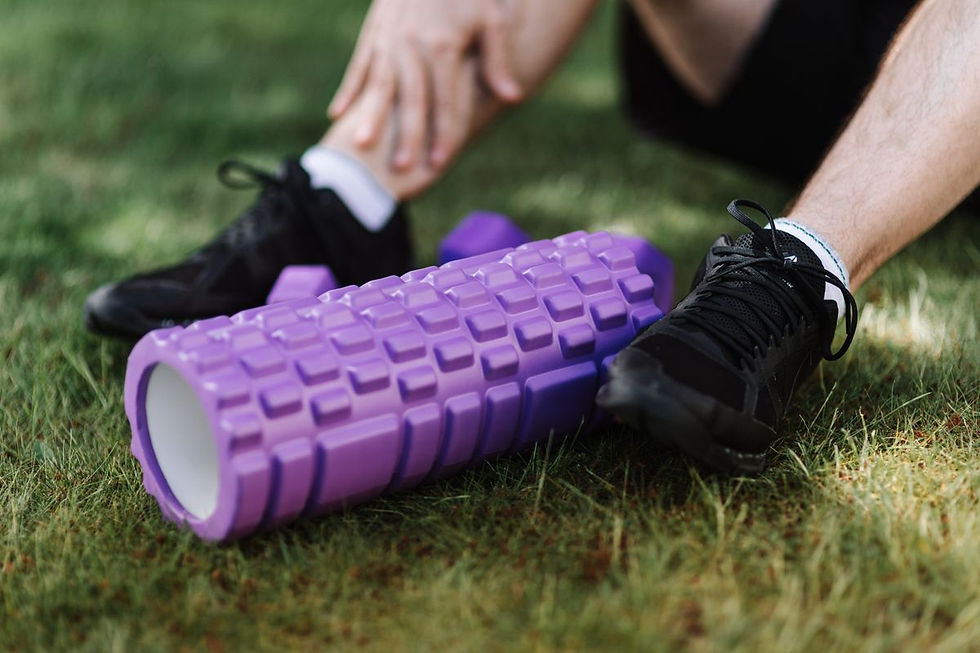
Self-administered work fills the gaps between professional sessions. Foam rolling, lacrosse ball work on the glutes and pecs, and percussion devices can be used daily for five to ten minutes on non-training areas. The distinction matters: professional massage addresses patterns a practitioner cannot reach or assess objectively, while self-work maintains tissue quality between appointments. For grapplers also practicing active recovery, massage fits naturally into a broader recovery protocol.
Massage, mobility, and rest: what combines with what
Massage works best inside a recovery stack, not as a standalone measure. Pairing bodywork with mobility training, breathwork, and adequate sleep creates a compounding effect that isolated recovery tools cannot match. Each modality addresses a different layer of the recovery process.
Massage + mobility: releases tissue restriction, then teaches control of new range
Massage + breathwork: deepens parasympathetic response and reduces systemic tension
Massage + sleep: massage improves sleep quality, which is when most tissue repair occurs
Massage + contrast therapy: alternating cold and heat enhances circulation after bodywork
Massage + light movement: walking or easy drilling on the same day prevents stiffness
Breathwork deserves special attention for BJJ athletes. Grapplers spend much of their training in a state of sympathetic arousal — heart rate elevated, breathing shallow, muscles braced. A massage session that incorporates slow nasal breathing or guided breathwork techniques shifts the nervous system into recovery mode more effectively than massage alone, and the effect on resting tension shows up as reduced muscle tone within minutes.
Rest days are the ideal container for this stack. A rest day that includes massage, mobility work, and a short breathwork session gives the body structured recovery inputs while keeping overall training load low. The difference shows up in grip strength, hip mobility, and perceived readiness at the next training session.
Signs you need professional evaluation, not just massage
Massage is not diagnostic. It cannot distinguish between muscle tightness that responds to bodywork and pain that signals structural damage or nerve involvement. Knowing when to pause massage appointments and consult a physical therapist, orthopedist, or sports medicine physician is a critical skill for any serious grappler.
Pain that persists for more than two weeks despite rest and bodywork
Numbness, tingling, or weakness in an arm, hand, leg, or foot
Sharp pain with specific movements, especially in the neck or lower back
Loss of range of motion that does not improve after a massage session
Pain that wakes you at night or is present at rest
Swelling, bruising, or visible deformity in a joint
Progressive weakness in grip strength or grip endurance
Neck pain warrants particular caution in BJJ. The sport involves repeated cervical loading from chokes, guillotines, and stacking. What feels like routine neck tightness can occasionally be a disc protrusion or nerve root irritation. If neck massage produces radiating pain down the arm, or if neck stiffness comes with headaches or dizziness, the practitioner should stop bodywork and seek medical imaging before returning to the mats.
Lower back pain that lingers after massage and mobility work may point to a disc issue, facet joint problem, or sacroiliac dysfunction. These conditions require specific diagnosis and often a structured rehabilitation program. Continuing to train through them while relying on massage for symptom relief risks turning an acute, treatable injury into a chronic condition.
What defines cost and how to choose a good therapist for BJJ
The cost of massage varies widely based on the therapist's training, session length, modality, and local market. Rather than focusing on price alone, BJJ athletes should evaluate therapists on criteria that predict whether a session will actually address the demands of the sport. A cheap, generic relaxation massage is more expensive in the long run than a targeted session that resolves a restriction.
Experience with athletes: a therapist who works with grapplers, lifters, or combat athletes understands training load
Assessment process: a good therapist evaluates posture, range of motion, and movement before applying pressure
Pressure communication: the therapist should check in about pressure and adjust based on feedback
Knowledge of anatomy: precise language about muscles and joints indicates formal training
Modality range: the ability to switch between deep tissue, myofascial, and lighter techniques as needed
No universal claims: avoid therapists who promise to "fix" structural injuries or "release toxins"
A therapist who has never trained BJJ can still be excellent if they understand the movement patterns and load demands of grappling. The most important question to ask is whether they assess before they treat. A therapist who puts hands on tissue without first evaluating how the athlete moves, where range is restricted, and what positions cause pain is guessing — and a grappler's body is too valuable for guesswork.
The best results come from a therapist who communicates with the rest of the athlete's recovery team. When massage therapists, strength coaches, and yoga instructors share information about an athlete's restrictions and progress, the recovery process accelerates. For BJJ practitioners in Houston, seeking a therapist who understands combat sports and works alongside a broader wellness ecosystem — including mobility training, breathwork, and contrast therapy — multiplies the value of every session on the table.


Comments